March 3, 2026
RED FM News Desk
Ontario and Nova Scotia have signed a first-of-its-kind agreement that will allow residents in both provinces to buy alcohol directly from each other’s producers, marking a significant step toward easing interprovincial trade barriers.
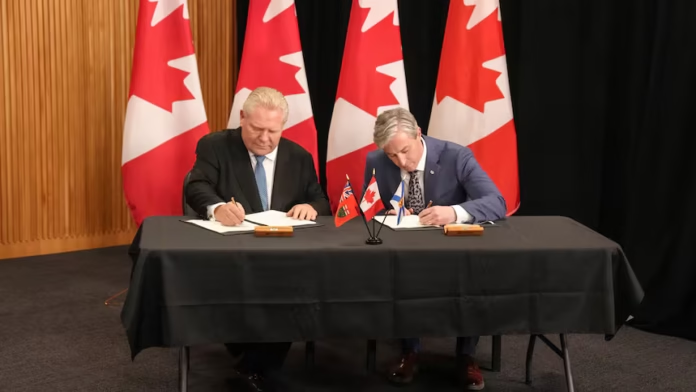
Premiers Doug Ford and Tim Houston announced the deal Thursday, saying it will enable wineries, breweries and distilleries in both provinces to sell directly to consumers across provincial lines through online ordering and home delivery.
The move is part of a broader effort to reduce internal trade restrictions and strengthen Canada’s domestic economy. Ford framed the agreement as especially timely amid ongoing global trade tensions.
“It has never been more important to boost interprovincial trade and support local businesses,” Ford said, adding that the deal will give consumers greater access to craft beers, wines and spirits from both provinces.
Until now, Ontario residents could only purchase alcohol from another province if it was listed by the LCBO, ordered through its private ordering program, or physically transported back by the purchaser for personal use. The new framework removes many of those barriers.
Beginning tomorrow, producers in both provinces can apply for the necessary authorizations to begin selling in each other’s markets. In the coming weeks, Nova Scotia producers are expected to receive approval to ship products directly to Ontario customers, with Ontario producers receiving reciprocal access.
Officials say the agreement will expand market opportunities for small and medium-sized producers while giving consumers more choice and convenience.
The deal also builds on Ontario’s broader push to strengthen internal trade. The province says it has signed economic cooperation agreements with 10 other provinces and territories aimed at unlocking an estimated $200 billion in economic growth. Leaders say the ultimate goal is to establish a pan-Canadian direct-to-consumer framework for alcohol sales nationwide.
For producers and consumers alike, the agreement signals a shift toward fewer provincial barriers and a more integrated domestic market.



 Loading ...