March 13, 2026
RED FM News Desk
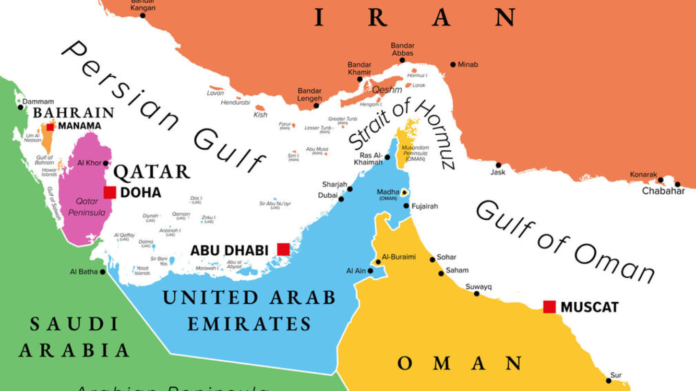
On a recent episode of Good Morning Toronto, hosted by Shameel Jasvir, we spoke with Gurinder, who regularly joins the show to help break down complex geopolitical developments. The discussion focused on the Strait of Hormuz and why it has become such a critical flashpoint amid the current tensions involving Iran and Western powers. Gurinder explained that the Strait of Hormuz is a narrow waterway between Iran and Oman that connects the Persian Gulf to the Arabian Sea, and at its narrowest point it is only about 33 kilometres wide, with shipping lanes just a few kilometres across. Despite its small size, it is widely considered the most important oil chokepoint in the world.
Around 20 to 21 million barrels of oil pass through the strait every day, which represents roughly 20 per cent of the world’s total oil consumption. Major energy exporters including Saudi Arabia, Iraq, the United Arab Emirates, Kuwait, Iran and Qatar rely on this route to move oil to global markets, particularly to Asian economies such as China, India, Japan and South Korea. With the ongoing conflict disrupting shipping activity in the region, global oil supplies could drop significantly and prices have already surged above $100 per barrel, raising concerns about inflation and economic pressure worldwide.
During the conversation, Gurinder also outlined what could happen if tensions escalate further. Iran has the capability to disrupt shipping by closing the strait, laying naval mines, or targeting oil tankers and infrastructure with drones or missiles. Even the threat of such actions can dramatically affect global trade, as shipping companies may avoid the route and insurance costs for tankers rise sharply. Reports already suggest that vessel traffic through the strait has dropped sharply compared to normal levels, highlighting how instability in this narrow waterway can quickly ripple across the global economy.



 Loading ...